Water Softeners, Filters and Reverse Osmosis in Gold Canyon
A softener is not a filter. It swaps the minerals that cause scale for salt, and it does nothing about chlorine, taste or particles. Call the 24/7 line to add, repair or choose a system; a plumber serving your area explains which one fits what your water actually does.
- Licensed and insured plumbers
- Same-day service when available
- 24/7 emergency dispatch
Is a water softener right for your home?
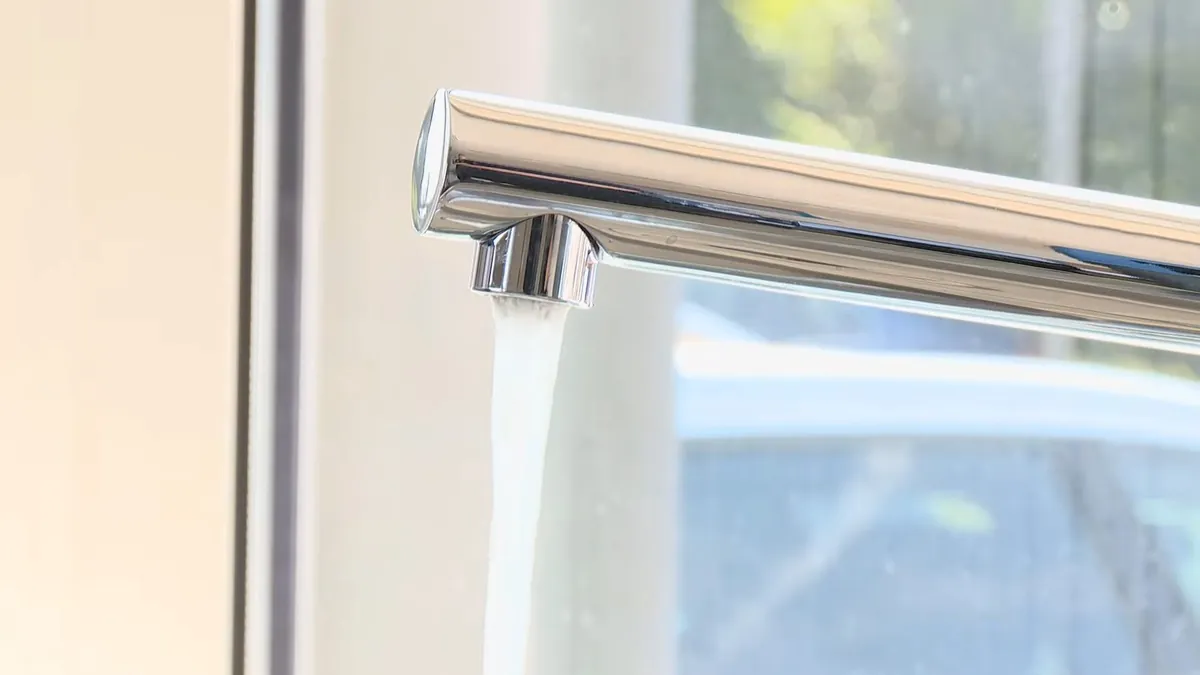
A softener helps when hardness is the problem. Hard water leaves white scale on faucets and shower doors, coats the inside of water heaters and dishwashers and makes soap work poorly. If your water is not hard, a softener solves nothing, so the first step is to know what you have.
- White crusty scale on faucets and shower doors.
- Spots on glasses after the dishwasher.
- Soap and shampoo that rinse poorly.
- A noisy water heater, which points to scale in the tank.
- Dry skin or stiff laundry after washing.
Hardness figures differ between sources, and none is published here. Confirm what your water provider reports for your address, and ask the plumber to test at the tap if you want your own reading.
Know your water source
Arizona Water Company supplies Apache Junction customers with groundwater from wells in the area. Which company serves a given Gold Canyon address depends on the street, so your bill names the provider whose report applies.
Water softener installation: what goes in and where
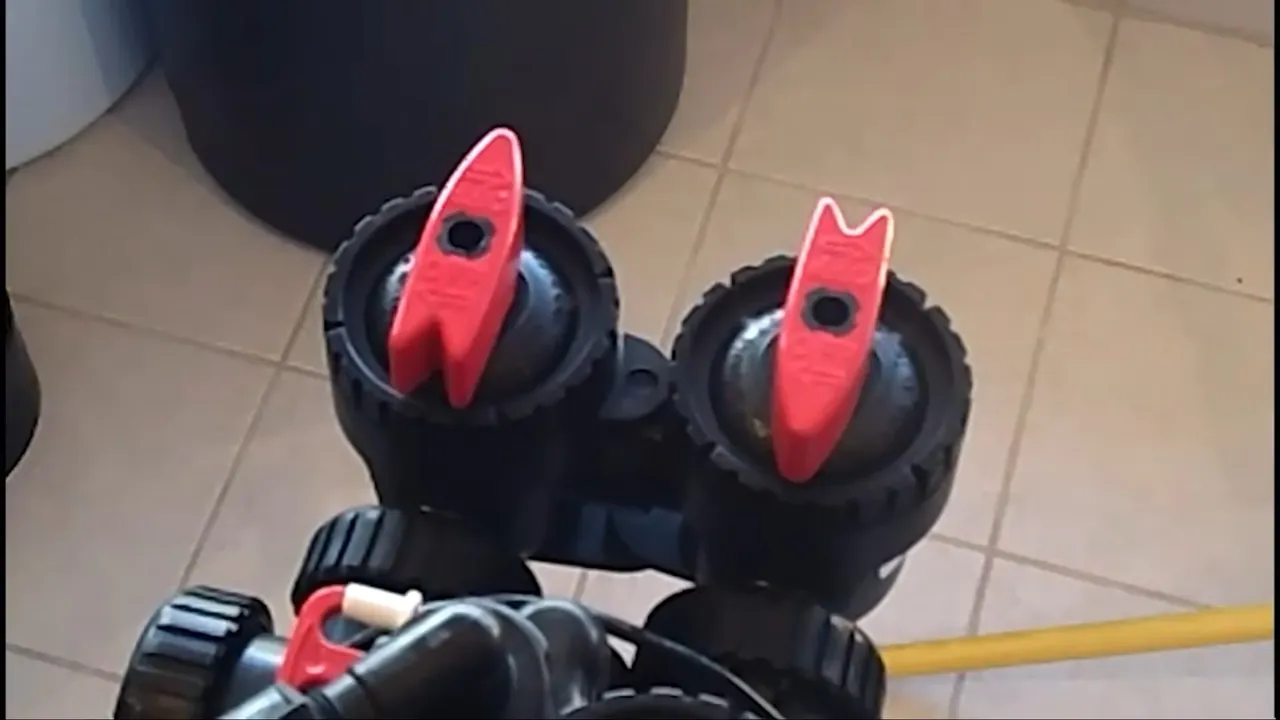
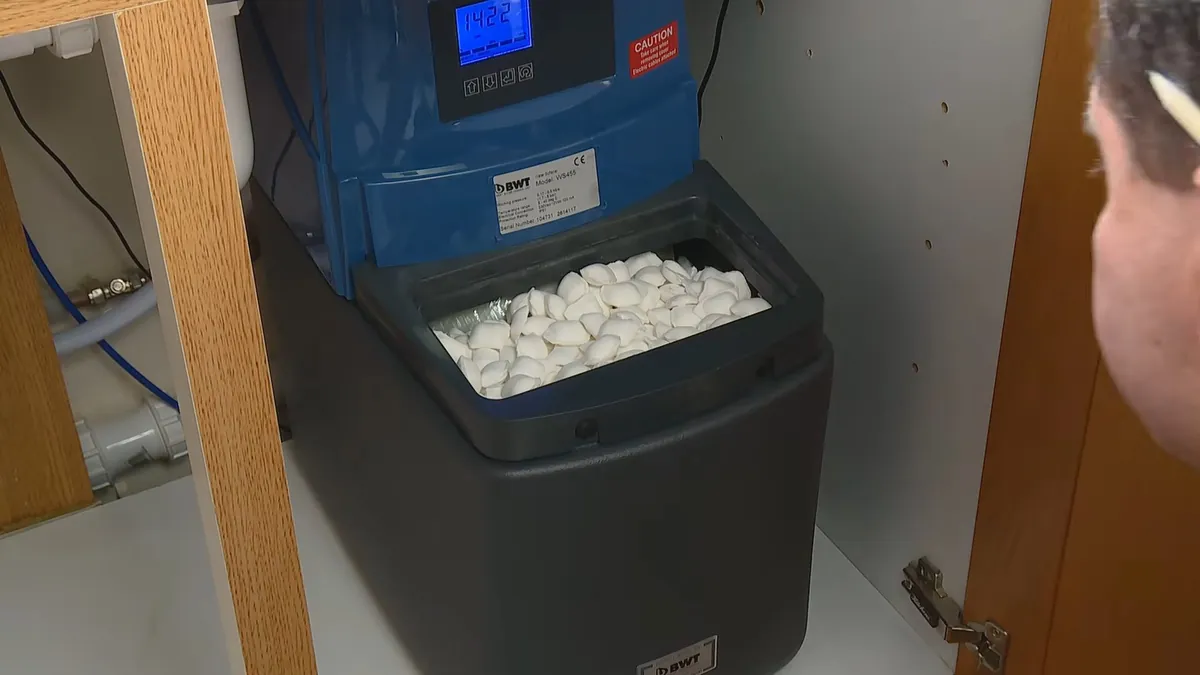
A softener install includes a resin tank, a brine tank for salt, a control valve and a drain line. It sits on the main supply line after the shutoff valve and before the water heater, so every tap gets softened water. An outdoor hose bib is often left on hard water so lawns and cars are not served with salty water.
The plumber needs floor space, a drain for the regeneration discharge and an electrical outlet. A bypass valve is fitted so the unit can be taken offline for service. Ask where the drain line will run and how the discharge is handled.
Scale on every fixture?
Call the 24/7 line. A plumber serving your area tests the water at the tap and recommends a system.
- Licensed and insured plumbers
- Same-day service when available
- 24/7 emergency dispatch
Softener repair and service: valves, salt and regeneration
A softener works in cycles. It collects hardness on resin beads, then regenerates by flushing them with brine. Salt, brine and regeneration are the three words behind most service calls.
| Problem | Likely cause | Fix |
|---|---|---|
| Hard water returns | Out of salt, salt bridge or stuck valve | Break the bridge, refill, reset the valve |
| Water runs to the drain constantly | Valve or injector fault | Service or replace the valve |
| Unit does not regenerate | Timer or control board fault | Replace the control |
| Salty taste | Brine drawn past the resin | Check the injector and the valve |
| Low flow | Resin or inlet screen clogged | Clean or replace the resin and screen |
A salt bridge, a hard crust that forms over the brine, is the simplest fix. Break it up with a broom handle and the unit usually recovers. Other faults need a plumber.
Use only salt made for softeners, and keep the lid closed. If the brine tank overflows or the unit floods the floor, close the bypass valve and call.
Under-sink drinking water filters and reverse osmosis
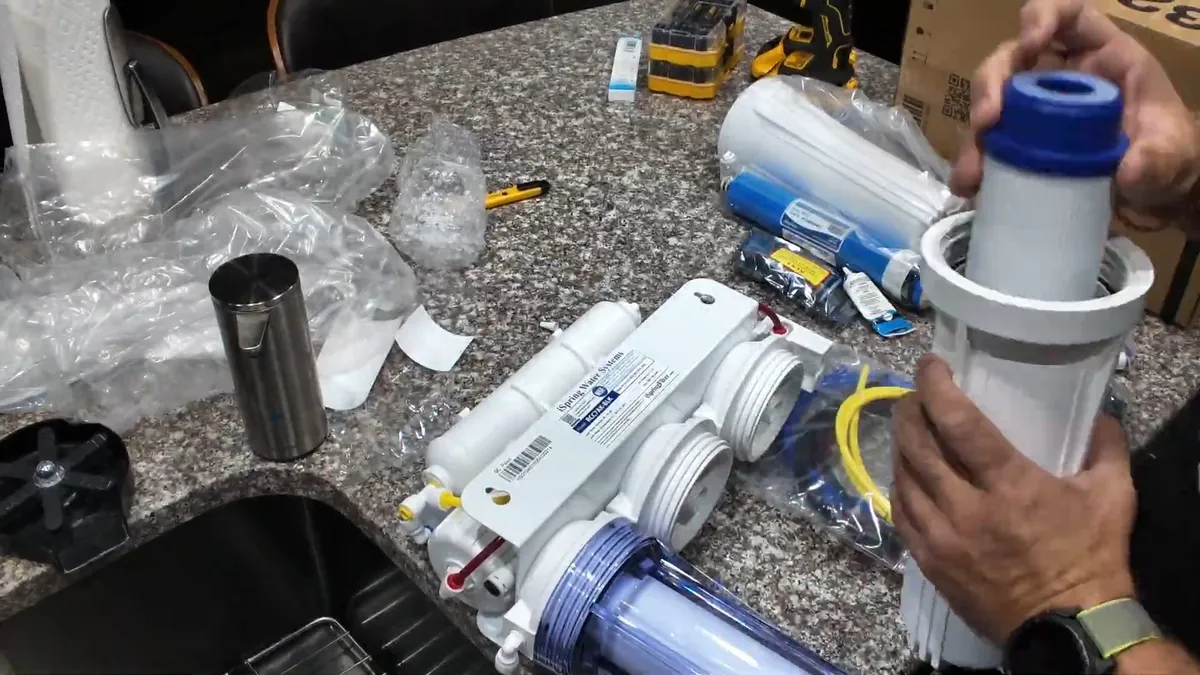
A drinking water filter at the kitchen sink improves taste and clears particles. A reverse osmosis system filters much more finely and gives its own faucet and a small storage tank. Both need filter changes on a schedule, and a missed change is the usual cause of weak flow.
Filter replacement is a short visit. The plumber shuts off the supply to the unit, swaps the cartridges and flushes the line. Ask for a calendar of change dates when the system goes in.
Whole-house filtration and water conditioning
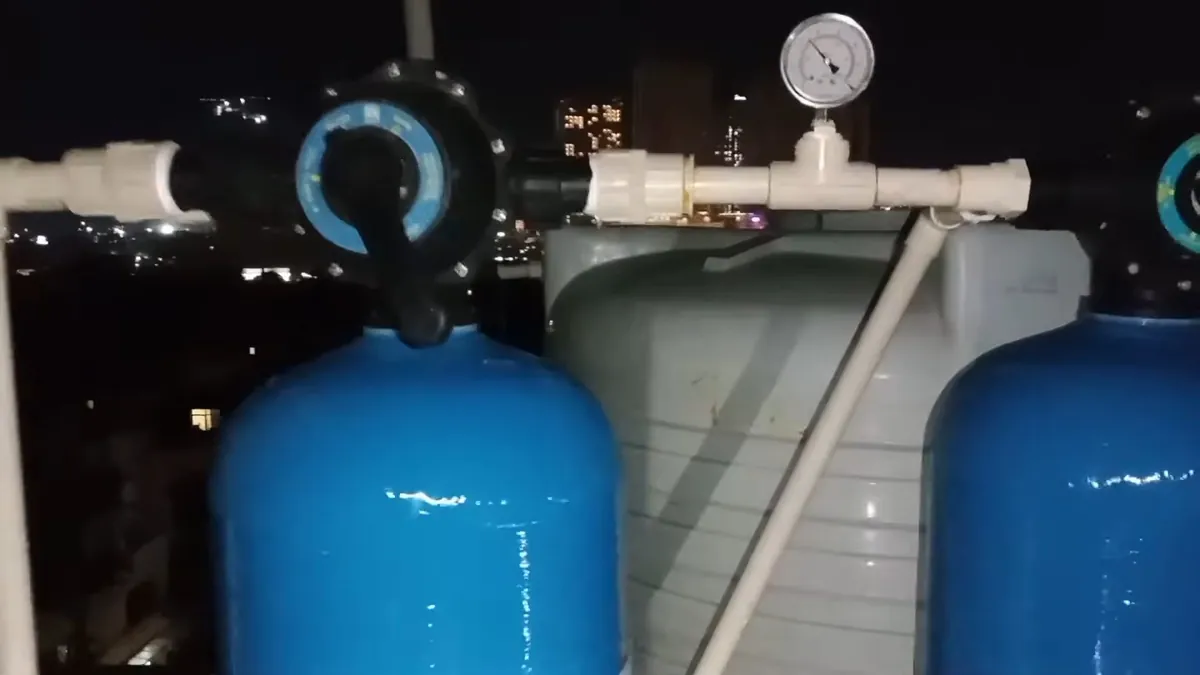
A whole-house filter treats water at the main line so every tap gets it. It removes sediment, and a carbon stage reduces chlorine and some tastes. Conditioning is a catch-all word for water treatment to reduce scale or other issues, and a plumber can explain which kind a given product is.
A whole-house filter reduces pressure a little as it clogs, so it is part of a maintenance plan, with cartridge changes on a schedule. A softener and a filter can run in series, with the filter first.
Salt, brine and regeneration: keeping a softener running
Keep the brine tank at least a quarter full of salt, and refill before it empties. Use the salt type the maker recommends. Regeneration runs at night on most units, and a plumber can set the timer and the hardness setting to match your water.
Bring a sample of the problem
Tell the dispatcher what the fixtures look like, and a plumber tests the water at your tap.
- Licensed and insured plumbers
- Same-day service when available
- 24/7 emergency dispatch
Three decisions before you buy
- Is your water hard? Read your provider's report, then test at the tap.
- Softener, filter or both? Match the system to the problem, not to a sales pitch.
- Where will the drain run? A softener needs a drain for regeneration discharge.
Water heater scale is also covered on the water heater repair page.
Know what is in your water
Call and a plumber serving your area tests at the tap and explains the options.
- Licensed and insured plumbers
- Same-day service when available
- 24/7 emergency dispatch
Softener and filtration questions
Can a water softener valve be replaced or reinstalled?
Yes. The control valve sits on top of the resin tank and sets the regeneration cycle. A plumber can replace a failed valve, reinstall a unit after a move or after a remodel, and reconnect the drain and brine lines. Give the make and model if you know them, and describe what the valve does when it fails.
What is the difference between water softening and filtration?
Softening removes the hardness minerals, calcium and magnesium, that leave scale on fixtures and heaters. Filtration removes particles, chlorine or taste from the water. A reverse osmosis system filters finely at one tap. Many homes use more than one of these, and the choice depends on what your water report shows and what you want to change.
How much does a water softener cost?
Unit size, type, the plumbing changes needed and whether you add a filter all drive the price, and the cost page shows how each one changes the total. The decision is usually between a softener alone and a combined system. Ask the plumber to compare both with your household size and your water report.
Can a water conditioner or softener be repaired?
Often. Common faults are a stuck valve, a clogged injector, a salt bridge in the brine tank, a failed timer or a worn resin bed. A plumber finds the fault, replaces the part and resets the cycle. A resin bed that has worn out is replaced or the unit is swapped, depending on its age.
What are the signs of hard water, and how do I test it?
Signs are white scale on faucets, spots on glassware, soap that does not lather and a heater that gets noisy. A simple test strip gives a rough reading, and your water provider's annual report lists the hardness for the supply it delivers. A plumber can also test at the tap if you want a reading for your own house.
Hard water effects elsewhere in the house
Mineral scale leaves marks well beyond the softener.
- tankless flushing and descaling matters because scale shortens the life of a heat exchanger.
- cartridges and aerators on scaled fixtures covers the parts that clog first.